preview
← Back to work
Case study/IDDS/INA Digital · Nov 2025 – Now

Designing how AI keeps a design system honest.

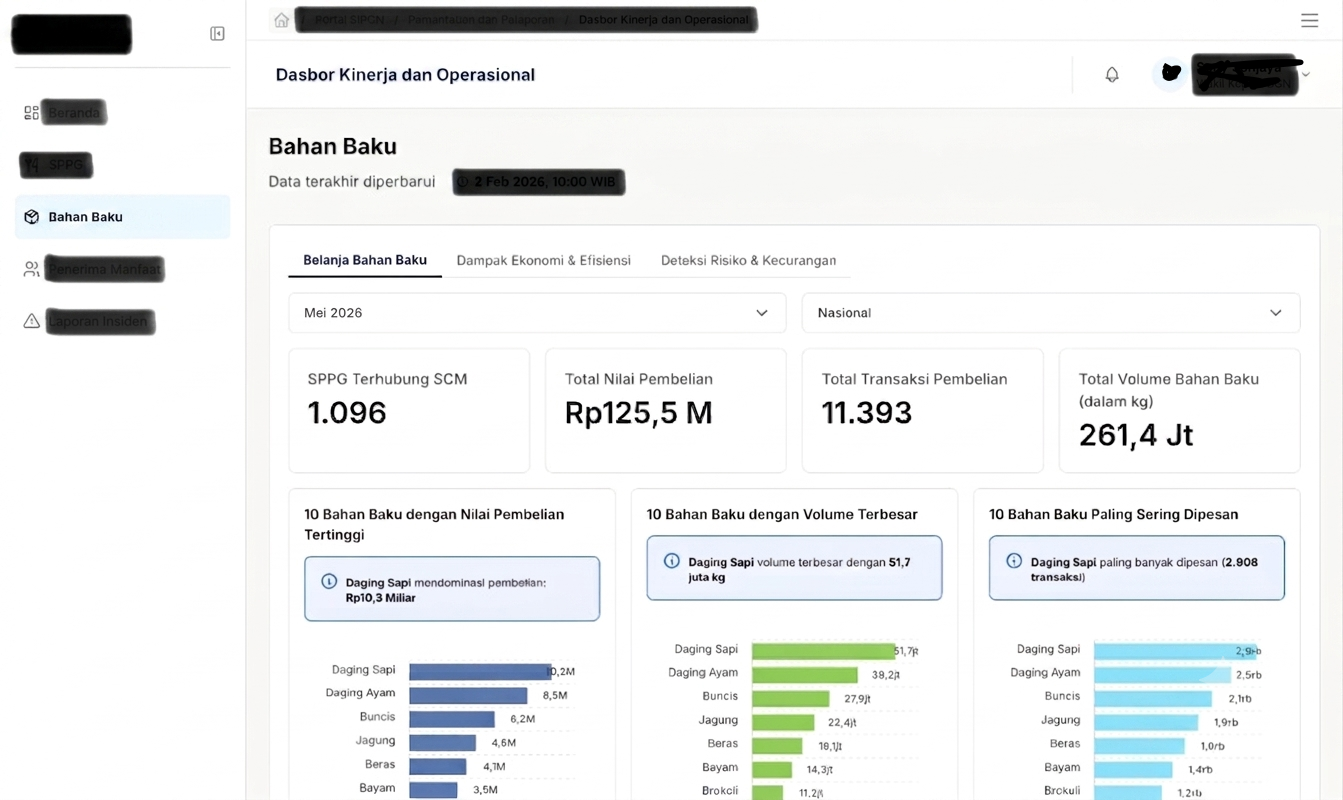
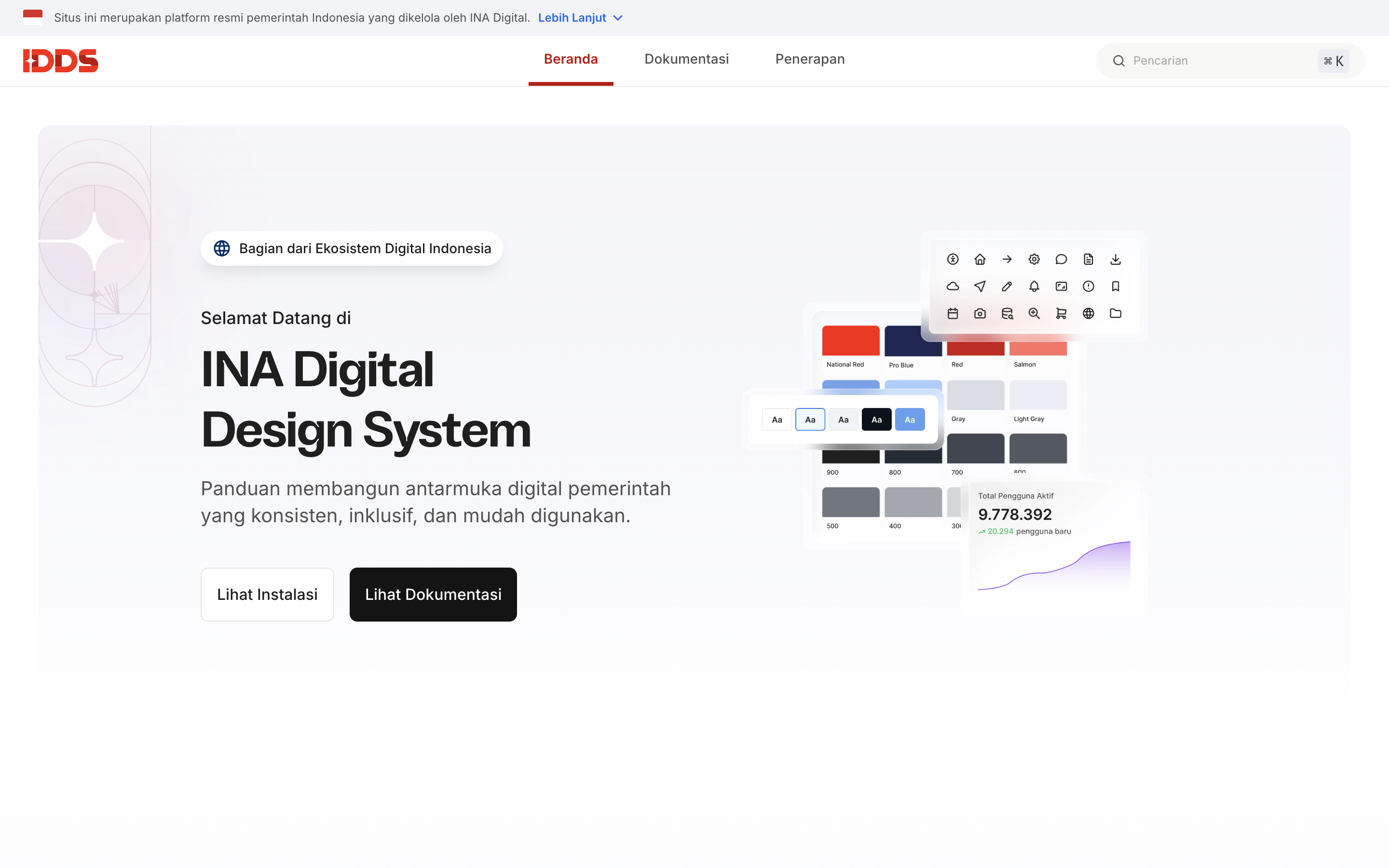
IDDS is Indonesia’s design system for government technology — already shipped when I joined. My job: design how AI maintains it, delivers with it, and hands off cleanly to engineering. The goal is simple to say and hard to do — go faster without ever breaking the system.
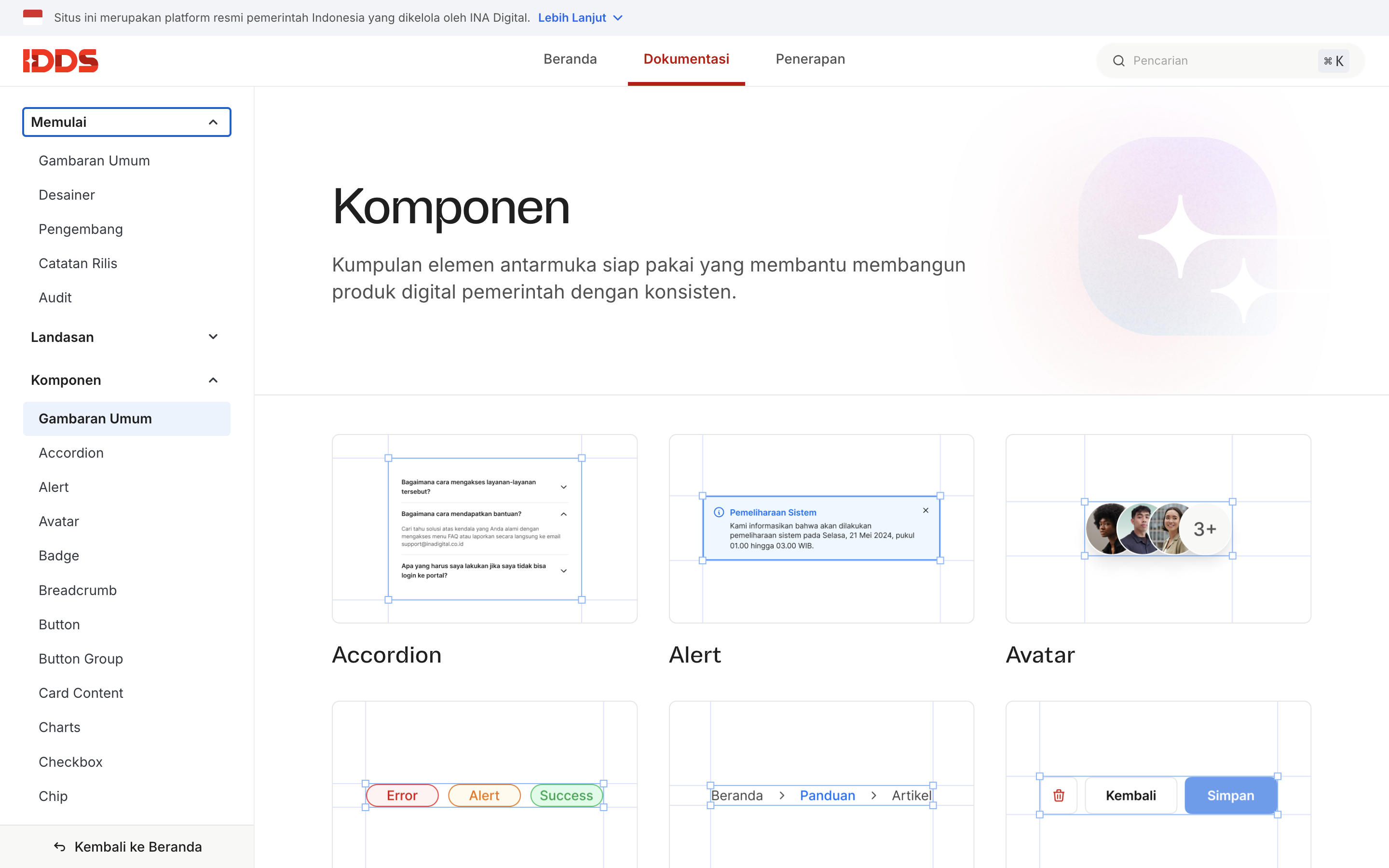
1 wk → 2 hrsconcept delivery
100%on-system output
GovTechnational scale
Visit the system
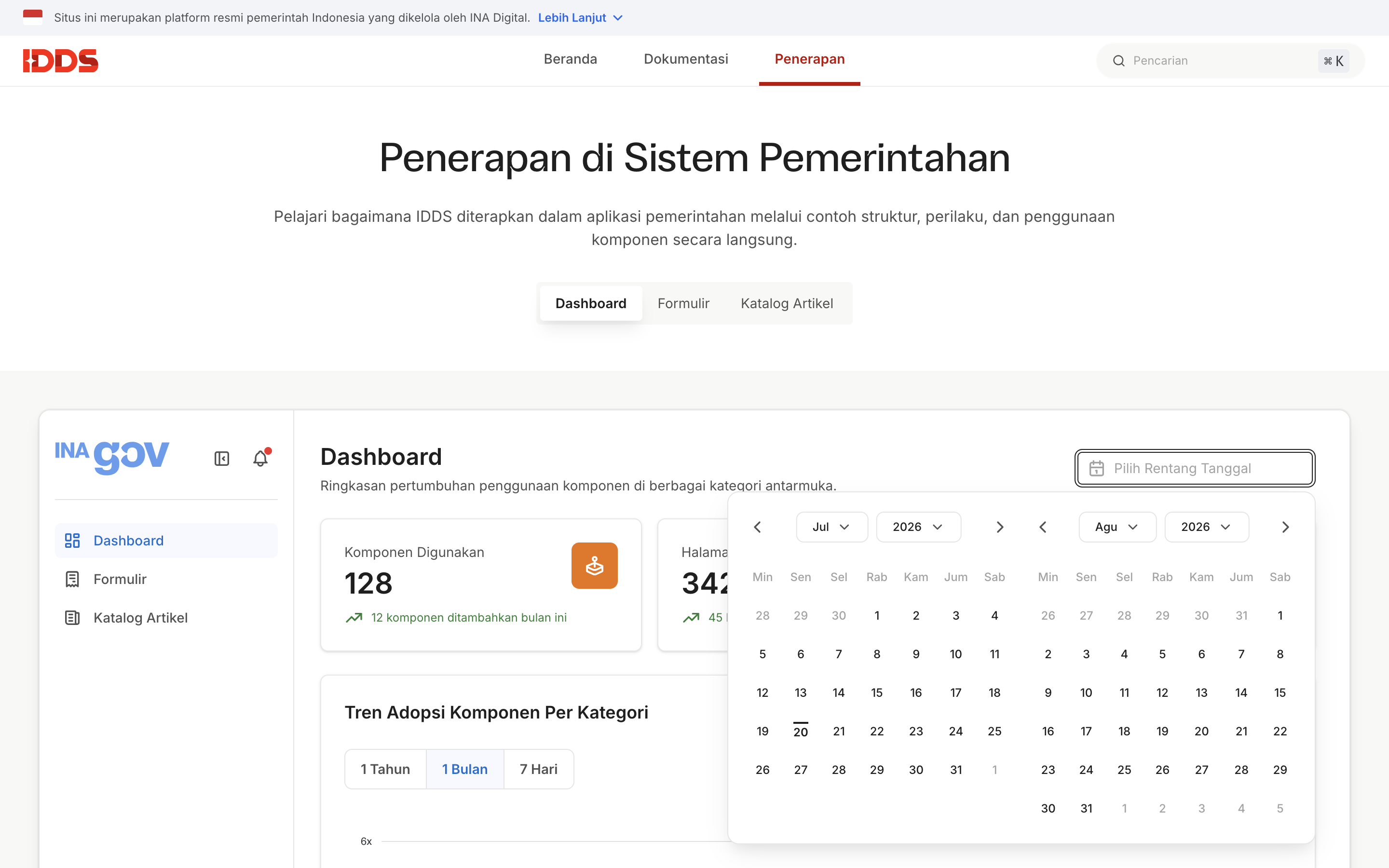
IDDS component library documentation
RoleDesign System Designer
Team5 designers · 1 writer · 1 visual · 4 engineers · 1 PM
TimelineNov 2025 – Now
PlatformWeb · GovTech

The brief: make AI a system citizen

IDDS was already live when I joined. The open question was how AI fits into it — without quietly eroding the thing.

I owned the design of how AI would maintain the system, deliver with it, and hand offto engineering. Done wrong, AI becomes a fast way to break consistency. Done right, it’s how the system scales.

What I learned about the work

Three realities shaped everything that followed.

Requests land with no runwayA brief arrives at 10am and a concept or prototype is due by noon. Speed isn’t a nice-to-have — it’s the job.
Government brand has to holdEvery service should feel like the same government. That familiarity is what keeps citizens comfortable using it.
Inconsistent components cost dev timeWhen pieces drift, engineers end up rebuilding what already exists — slowing every release.

Three things to solve

01Fast, but still goodTight turnarounds need delivery that’s quick and genuinely usable — not throwaway.
02Protect the handoffDesigns must use what already exists so developers never have to build new components.
03Turn thin briefs into an MVPClient docs are often incomplete — someone has to translate them into the bare-minimum concept that’s actually needed.

The workflow I designed

A set of focused AI agents, each with one job — strung together so the system stays intact end to end.
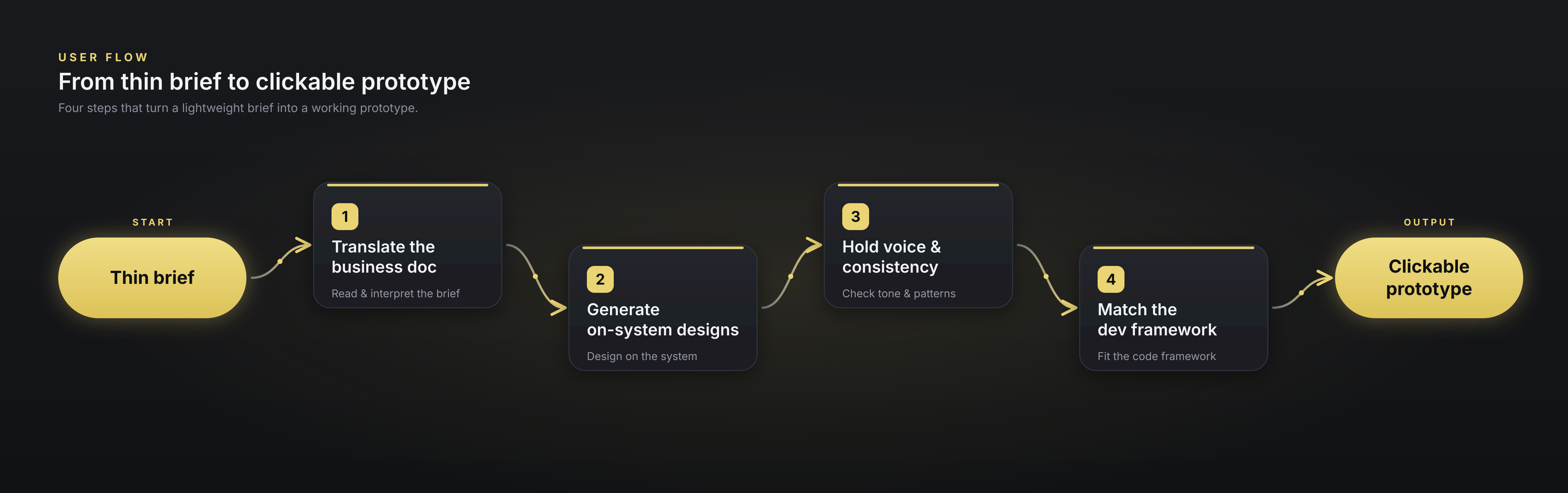
1Translate the business docAn agent that reads incomplete product/business docs and turns them into a clear, buildable MVP scope.
2Generate on-system designsAI that produces strong concepts using only IDDS components — consistent by default, not by review.
3Hold voice & consistencyGuardrails that keep tone of voice and visual language aligned with the GovTech standard.
4Match the dev frameworkOutput shaped to the engineering framework, so handoff doesn’t spawn rework.

Where it is now

We're live on the design side of the pipeline — four steps, one continuous flow.
TranslateRead the brief, surface the real MVP scope.
DesignGenerate concepts from IDDS components only.
ValidateCheck consistency, voice, and system alignment.
PrototypeHand off something clickable, fast.

Built with engineering, not around it

A workflow that hands off cleanly only works if it speaks the developers' language. So it was designed with them.

Design that fits the frameworkI worked with engineering so AI output maps to their components and structure — nothing gets built twice.
Real IDDS integrationMade sure the workflow plugs into the actual IDDS library, not a parallel copy of it.
What changed
1 wk → 2 hrsDelivery timeConcept-to-prototype that took a week now lands in hours — two days at most.
100%On-system outputDesigns come out using existing IDDS components by default.
0New components for devHandoff matches the framework, so engineers don’t rebuild.
What I’d carry forward

AI doesn’t replace the designer. We’re still the ones orchestrating the craft — making sure what ships is genuinely good for humans.

What I’d carry forward

A system stays a system only if speed never costs consistency. The workflow had to protect both at once.

What I’d carry forward
Read another projectView all →