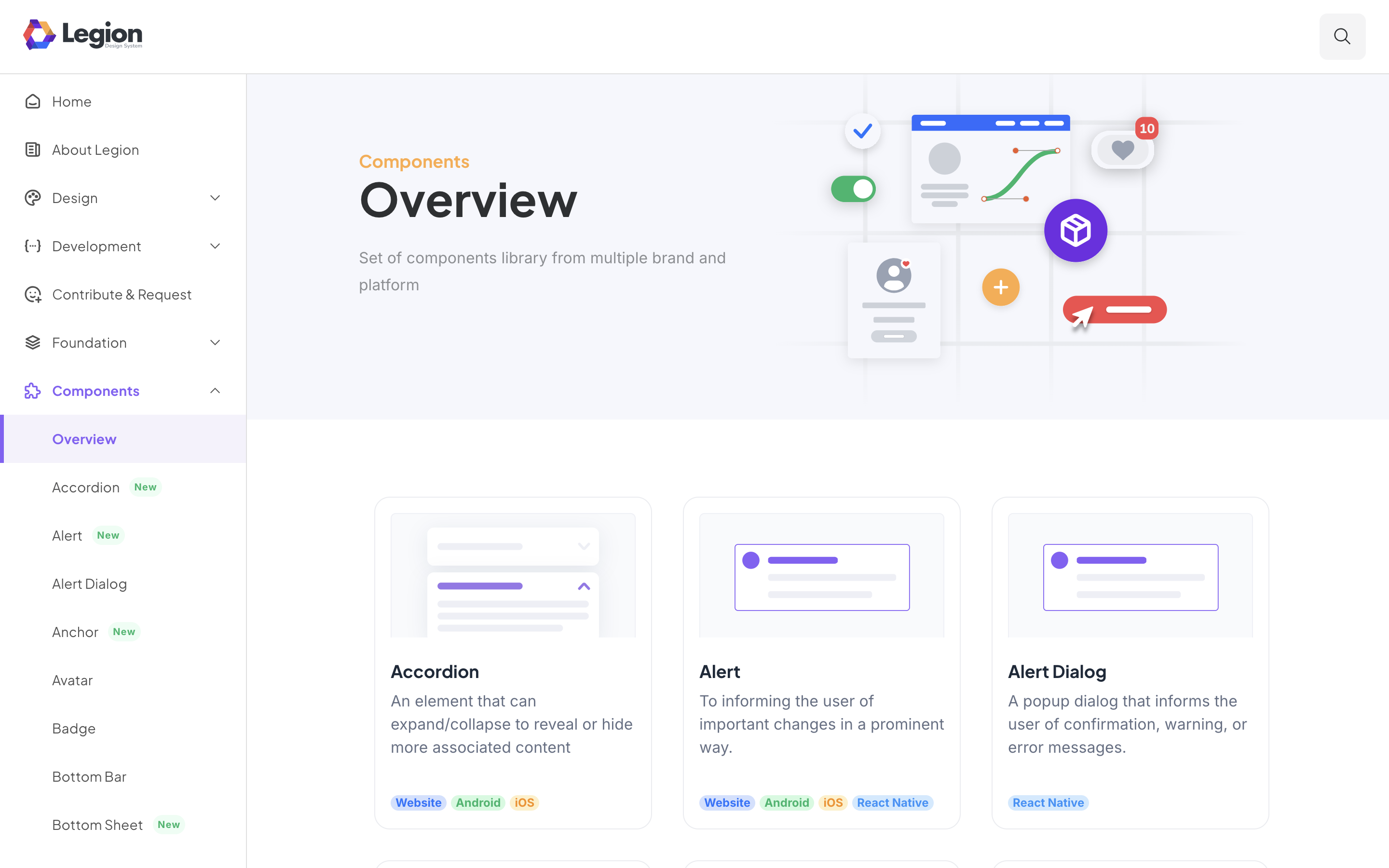
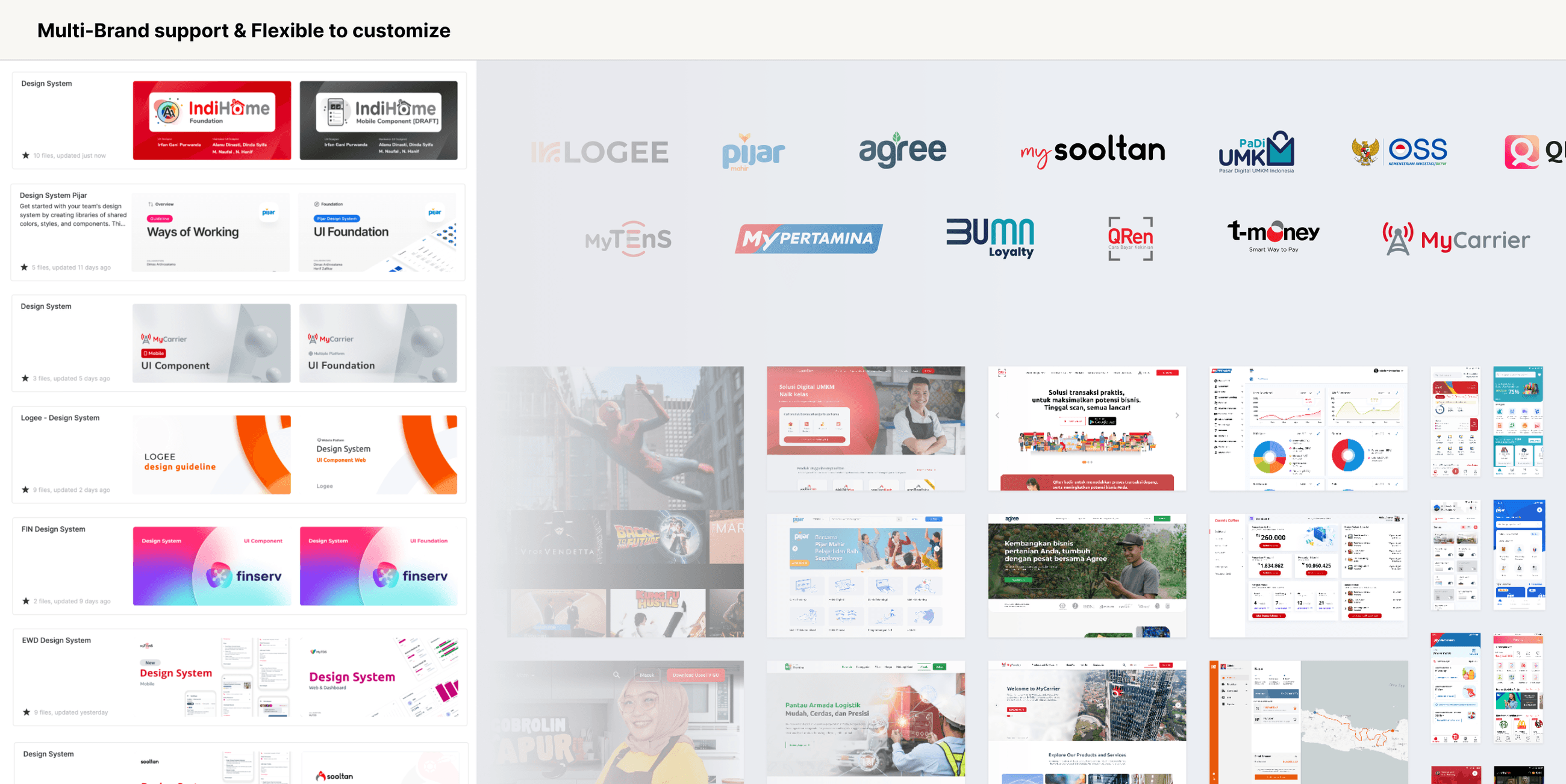
One system for 24 brands and hundreds of people building.
Telkom Indonesia ships a lot of products, across a lot of brands. Every team kept rebuilding the same buttons — just never the same way. I led Legion, a multi-brand design system, steering a team of 20 designers and 20 engineers to make one set of parts that works everywhere.
Everyone built the same button. Differently.
Twenty-four brands, hundreds of people, and no shared kit. So every team kept reinventing the basics.
Buttons here, buttons there, all subtly different. Designers and engineers kept redoing each other’s work, and since every feature started from a blank page, shipping was slow. The bigger the product got, the worse it spread: harder onboarding, accessibility quietly skipped, and a pile of brands, teams, platforms, and frameworks each pulling their own way. What got designed and what got built rarely matched.
Where the time was going
I talked to teams across the company and traced where work kept piling up. Three things came back again and again.
What “good” had to mean
Before designing anything, we wrote down the targets. If Legion couldn't move these, it wasn't working.
Four bets
What we shipped
Legion shipped as a real toolkit, not a slide deck.
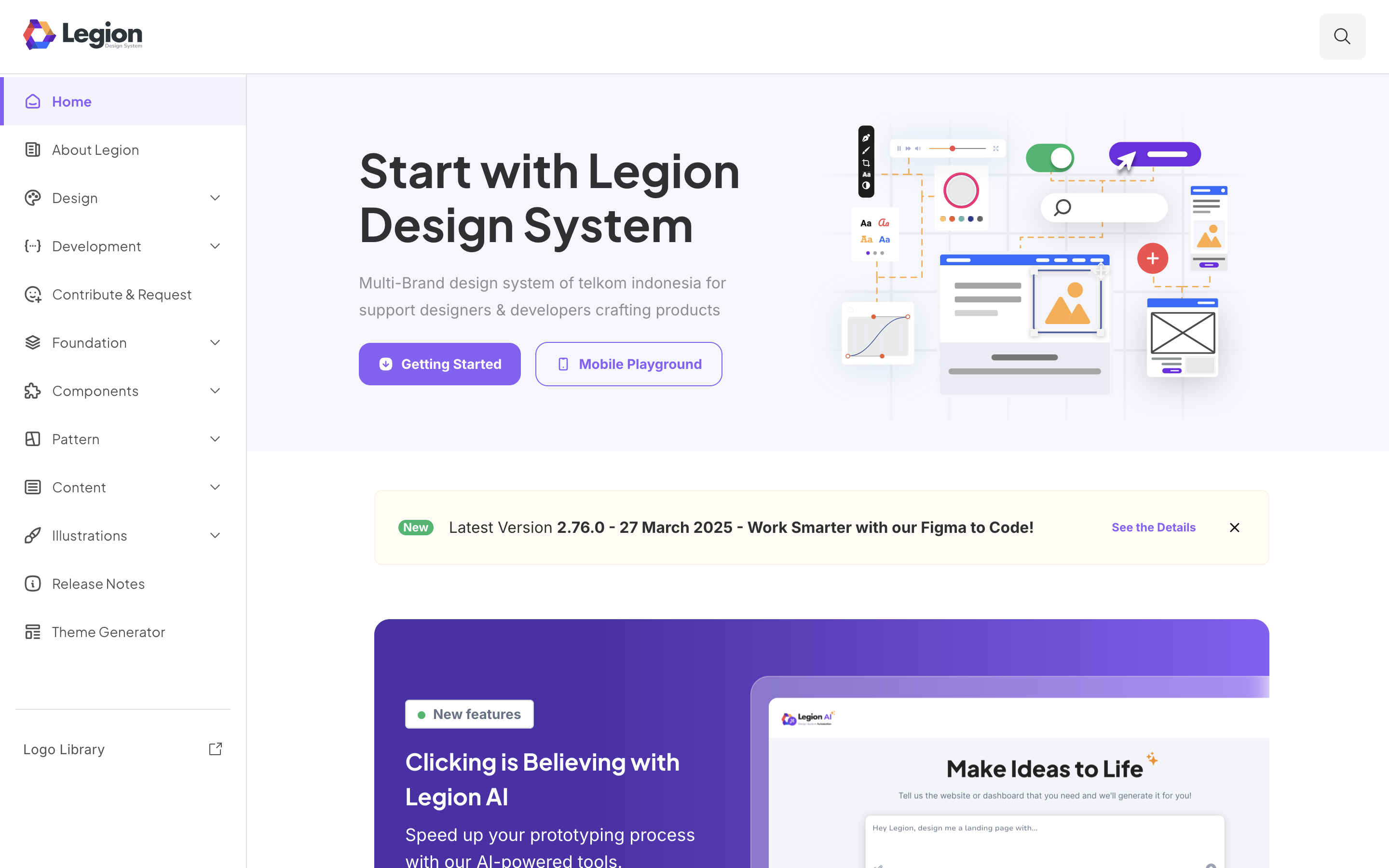
A cross-platform UI kit and library, kept in sync in real time so design and code stop drifting apart. Standardized templates for the patterns that keep coming back. Plugins, instant handover, even AI/MCP integration to make adoption painless. And a documentation site plus app covering the whole asset library, guidelines, and standards. We launched it in the open at DTP Expo #2.
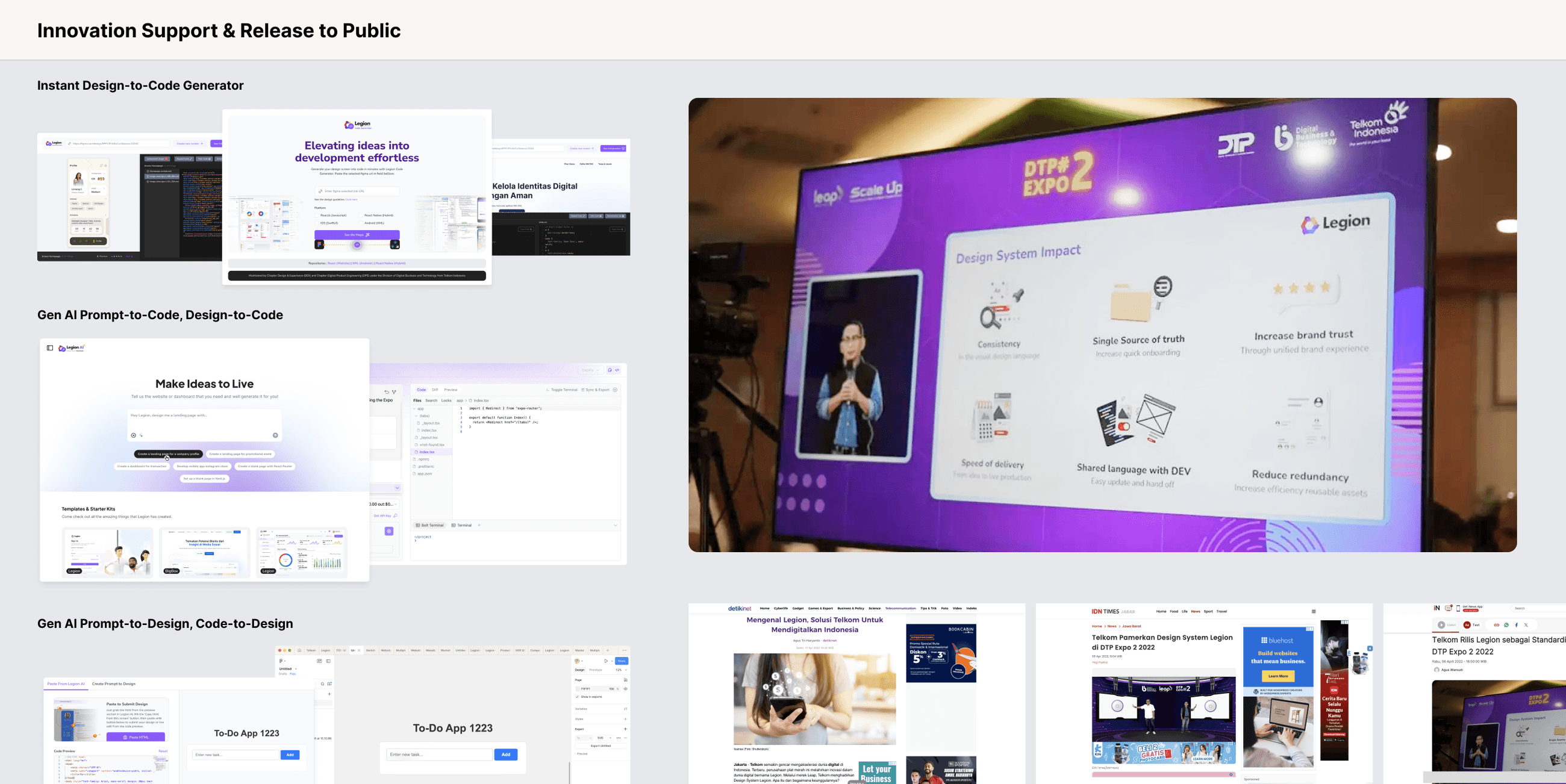
Built with engineering, not just for it
A design system lives or dies on whether engineers actually adopt it. So I built it with them, not at them.
We agreed on a component architecture that held up across frameworks and platforms, and kept design and code in sync in real time so handoff stopped being a rebuild. A part only shipped once it was proven on both sides — design and engineering. The calls were driven as much by what was feasible to build and maintain as by how it looked.
What I owned
I set the roadmap. Forty people across design and engineering needed one direction. I shaped where Legion was heading and the order things shipped, so the work added up instead of scattering.
I brought AI into the workflow. I pushed to fold AI into Legion so designers spend less time on repetitive setup and more on the actual design — speeding the whole team up without dropping quality.
Beyond the numbers, Legion trimmed development cost by around Rp100M and shifted how teams think about reuse. It also took home Best Documentation at the Design System Award 2023.
“A design system is a product, and its customers are the teams using it. Treating it that way changed everything.”
What I’d carry forward“Numbers earned the buy-in. Agreeing on success metrics up front is what got stakeholders on board.”
What I’d carry forwardA look at Legion
The documentation everyone builds from — and the same component, themed across brands.