Making card trading fraud-proof — and worth more.
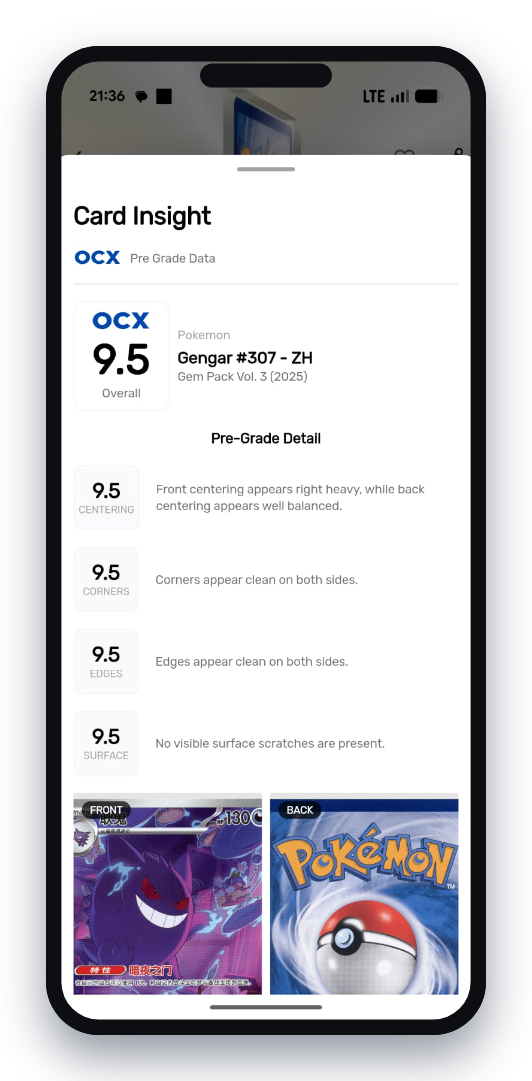
Before OCX, collectors traded Pokémon cards through events and Facebook groups — and got burned constantly. Fake cards, sellers who vanished after payment, conditions that didn’t match the photos. I helped design a marketplace where OCX sits in the middle and AI grades every card, so a trade is finally something you can trust.
Every trade was a gamble
Buying a card meant trusting a stranger from a Facebook group or a swap meet — and hoping for the best.
The card shows up fake. The seller disappears the second your transfer clears. The package never arrives. The condition is nothing like the photos. For TCG collectors this was just the cost of playing — and it made everyone wary of every single deal.
What I learned about the hobby
I dug into how collectors actually value, grade, and trade cards — and where trust already lived.
Three things to solve
The calls I made
How a card moves
The seller ships to OCX; we grade and verify in the vault; the card goes live, graded and priced. The buyer never has to trust a stranger — only OCX.
Built with engineering, not just for looks
A grade and a timeline only mean something if the system can actually back them up. So the hard parts were decided together.
What we shipped
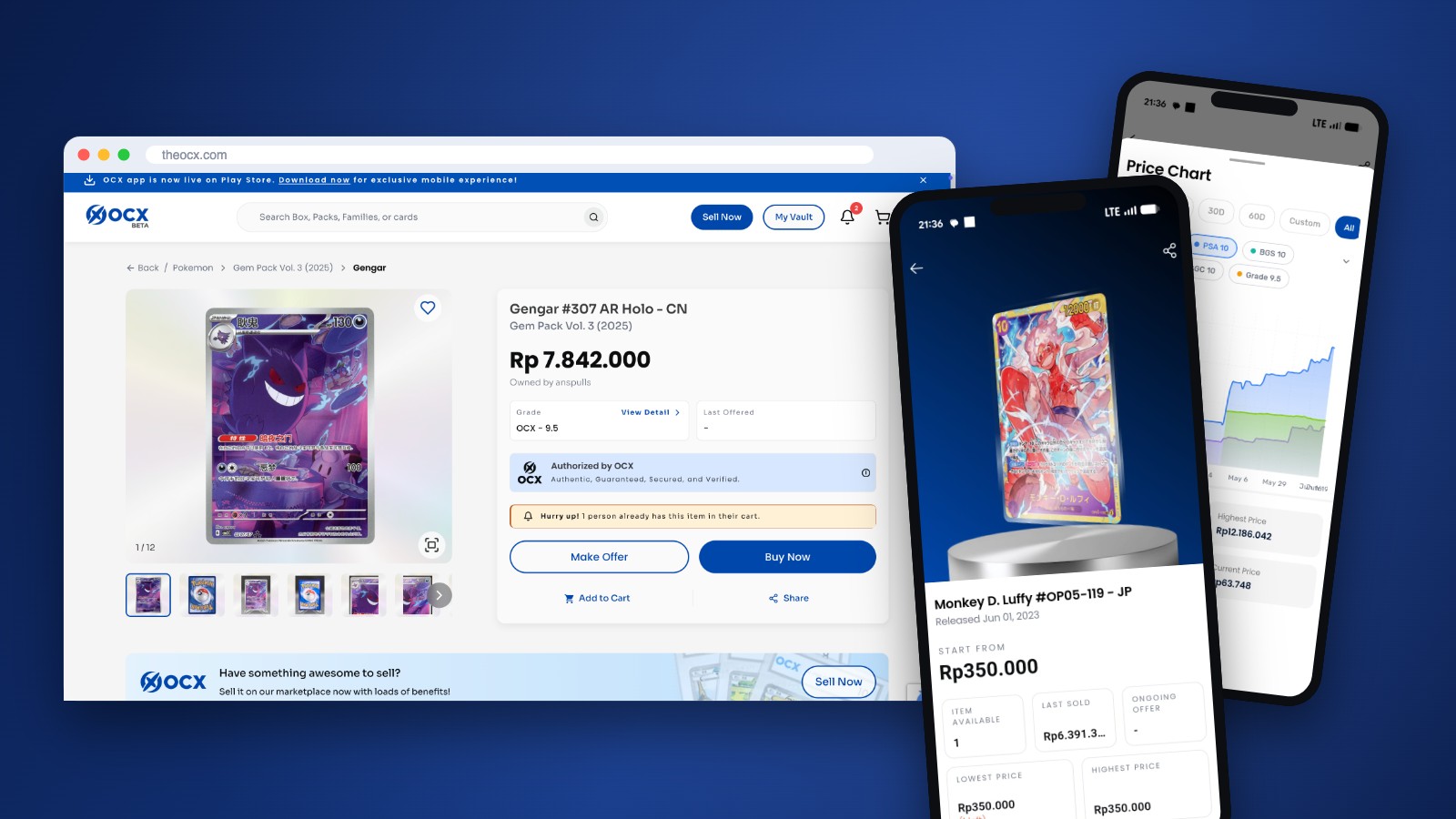
An end-to-end marketplace — both sides of the trade.
We ran a pilot with the CEO’s collector community — putting OCX’s AI grades head-to-head with real PSA results, and running full buy and sell flows end to end before launch.
“Community is the foundation of trust. Build security people can feel and they’ll bring the rest.”
What I’d carry forward“AI pre-grading erased the doubt that used to stop people mid-purchase — proof beats promises.”
What I’d carry forwardA look around the product
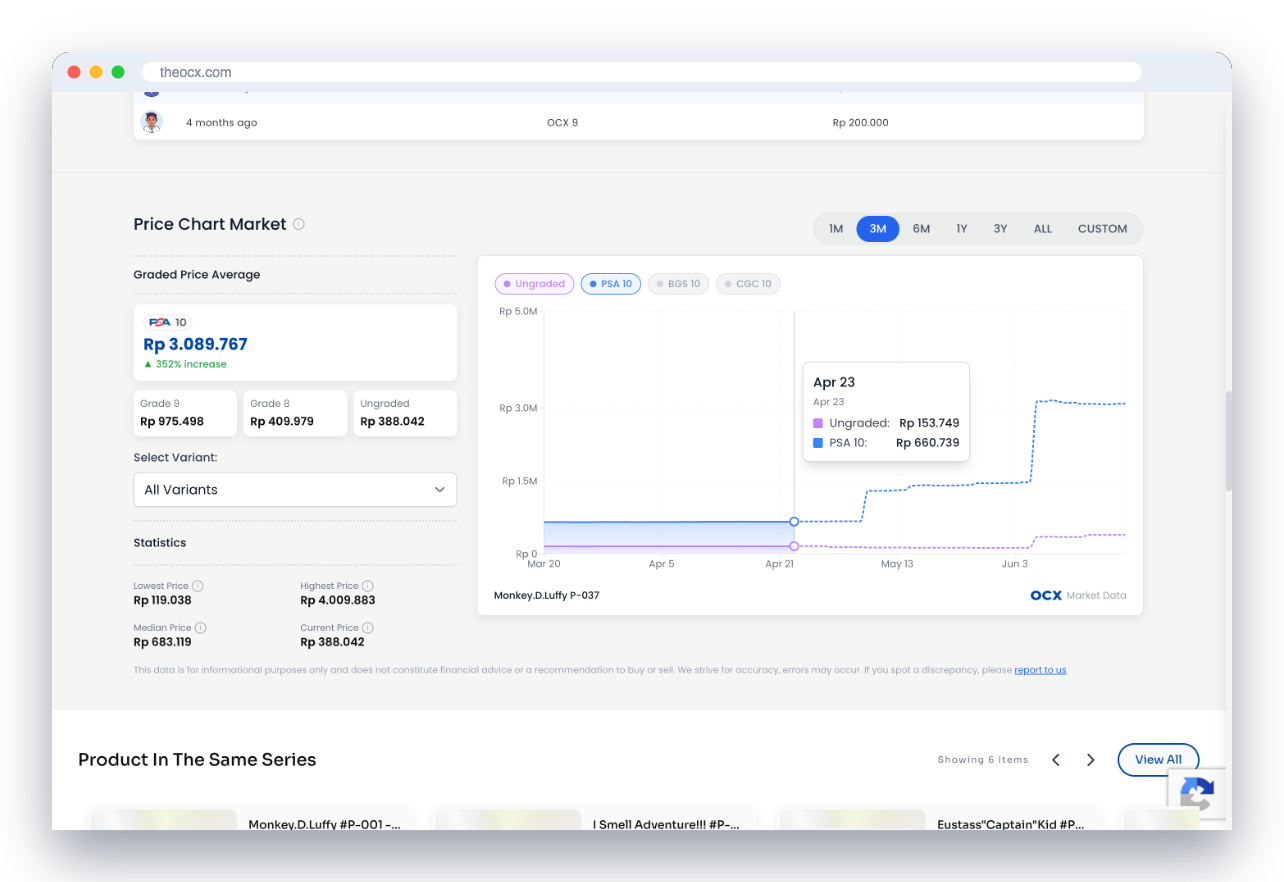
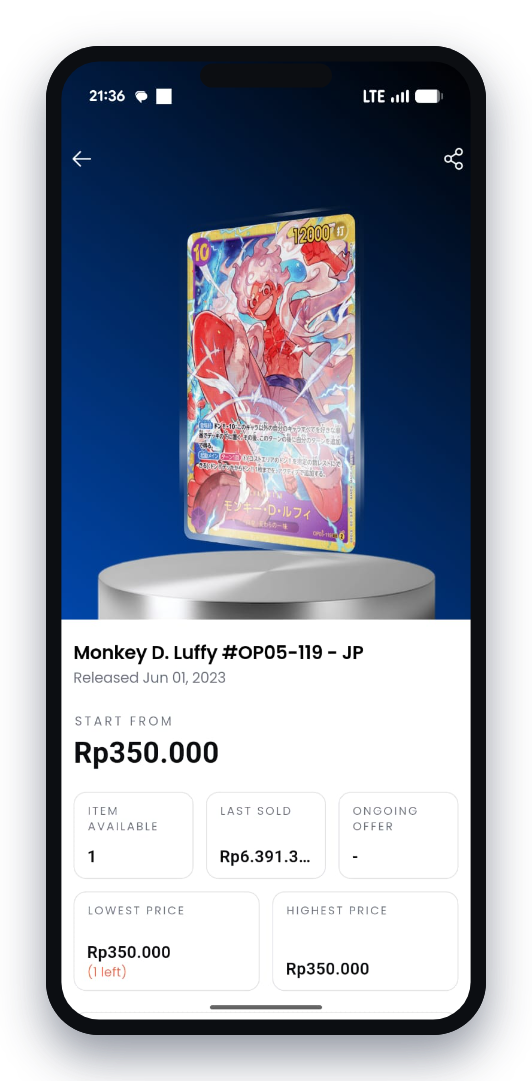
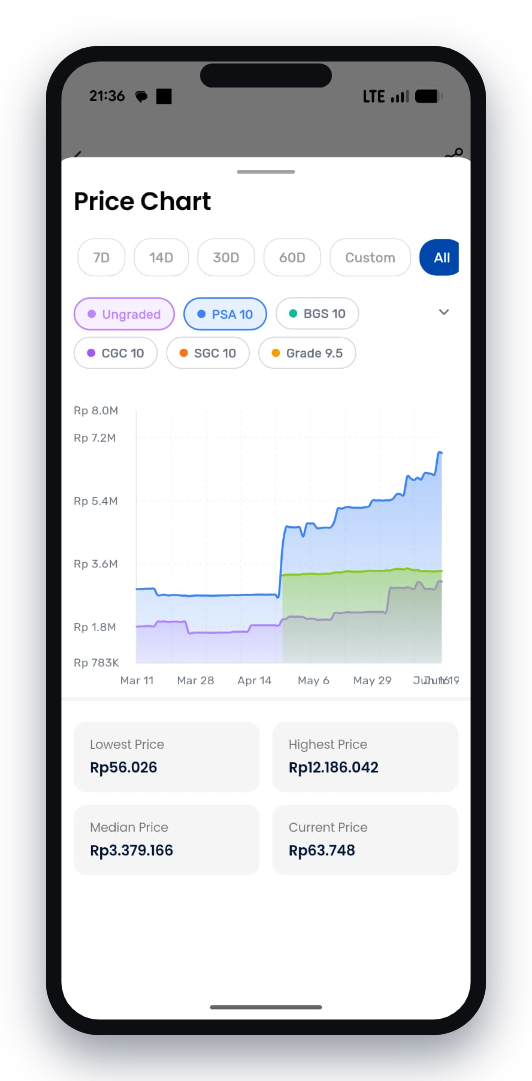
From buying on the web to checking a grade and price history on mobile.